


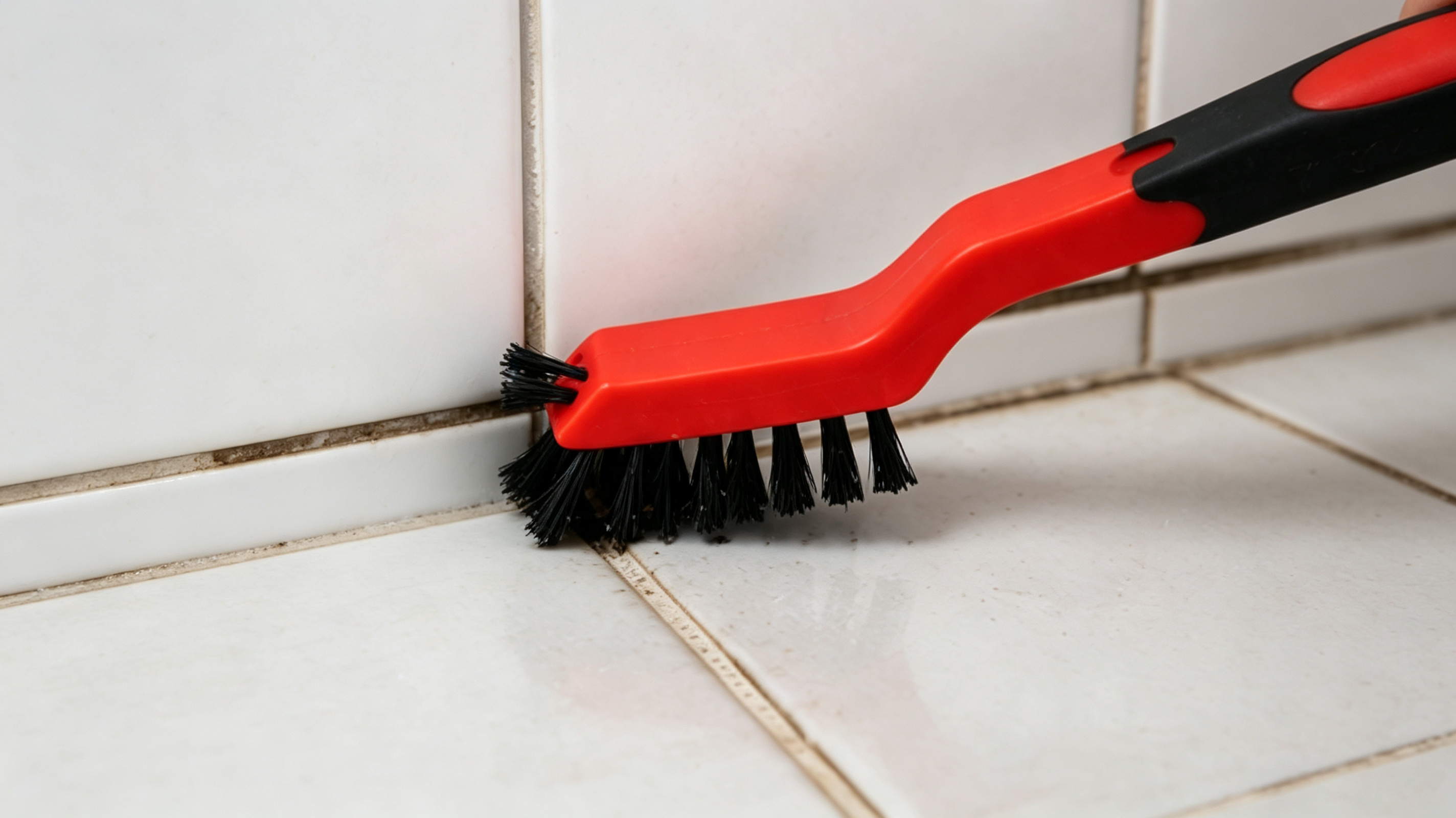
In 2026, one of the most valuable characteristics a cleaning tool can offer is not novelty for novelty’s sake, but the ability to solve several real maintenance problems with a simple, reliable design. That is exactly where the metal wire cleaning brush is finding renewed commercial relevance in the United States and Europe. A well-designed wire brush can remove loose rust from appropriate metal surfaces, break up stubborn deposits, clean bolts and hardware, reach corners around brackets and joints, prepare steel before touch-up coating, maintain workshop tools, and support routine cleaning in garages, utility rooms, maintenance shops and industrial facilities.
The market opportunity is not based on the claim that every household suddenly needs the same aggressive brush. The opportunity comes from segmentation. A compact household brush for metal fixtures should not be specified in the same way as a workshop rust-removal brush, a welding-cleanup brush or a maintenance brush used before repainting. Buyers increasingly want products that are clearly matched to their intended surface, environment and user. This shift makes the category especially suitable for OEM and ODM development, because wire material, wire diameter, trim length, tuft density, head width, handle design, packaging and safety instructions can all be adapted to the target market.
Our company supports OEM and ODM programs for overseas importers, tool distributors, cleaning-product brands, DIY retailers, industrial suppliers and e-commerce sellers. The objective is not simply to print a logo on a standard brush. It is to help buyers build a product with a clear use case, consistent quality and a credible reason to be chosen over a generic low-cost alternative.
1. Why the U.S. and European markets are giving practical maintenance tools more room in 2026
Retail activity shows that the channels selling hardware and household maintenance products remain active
Public U.S. retail data provide a useful indication of the broader commercial environment. The Federal Reserve Bank of St. Louis FRED database, using U.S. Census Bureau data from the Advance Monthly Sales for Retail and Food Services report, recorded seasonally adjusted July 2026 sales of approximately US$42.6 billion for building material, garden equipment and supplies dealers. That was about 6.7% above the level one year earlier. This category is much broader than wire brushes, so it should not be presented as product-specific brush sales. What it does show is that an important U.S. retail channel for tools, hardware, repair and outdoor-maintenance products was operating at a materially higher dollar sales level than in July 2025.
In Europe, Eurostat reported that retail trade volume in the European Union was 1.2% higher in June 2026 than in June 2025, even though the month-to-month figure was slightly lower. In May, EU retail trade volume had been 1.9% above the previous year. Again, these figures cover the wider retail economy rather than a single cleaning-tool category. For a cross-border seller, however, they confirm that consumer retail activity remains large and that household and maintenance categories are competing within a functioning market rather than a frozen one.
International trade remains large enough to reward flexible suppliers
UN Trade and Development (UNCTAD) estimated that global goods trade reached about US$13.7 trillion in the first half of 2026, roughly 12.5% above the same period in 2025. UNCTAD also stressed that a significant portion of the increase reflected higher prices rather than stronger physical volumes, so the figure must be interpreted carefully. The World Trade Organization’s March 2026 baseline forecast expected global merchandise trade volume to grow by 1.9% in 2026 after stronger growth in 2025.
For metal wire brush suppliers, the practical implication is not that international trade growth automatically translates into brush orders. The implication is that overseas distributors are still buying, comparing supply sources and adjusting product portfolios. A compact tool that can be sold in several materials, sizes and packaging formats is relatively easy to test in a new market. This makes the category attractive for importers that want to start with a controlled number of SKUs and expand only after sell-through is proven.
2. Multi-scenario capability is the core commercial advantage
Home maintenance: small problems that general-purpose sponges cannot solve efficiently
In the home, metal wire brushes are useful when the problem is concentrated on a durable metal part rather than a delicate decorative surface. Examples include loose rust on appropriate steel hardware, oxidation on selected utility-room components, stubborn deposits around screws or brackets, maintenance of metal hand tools, or cleaning a small metal fitting before applying a protective coating. The advantage is precision. A narrow brush head can place mechanical action exactly where it is needed, while a general scrub pad may be too soft or too large.
That does not mean a wire brush is suitable for every kitchen or bathroom surface. Non-stick cookware, enamel, polished stainless steel, chrome plating, acrylic, decorative coatings, soft metals and other scratch-sensitive finishes can be damaged. A high-quality consumer product should therefore state its intended surfaces clearly and recommend testing in an inconspicuous area when suitability is uncertain. For a brand, this kind of honest usage guidance is not a weakness. It reduces misuse, protects reviews and makes the product look more professional.
Garage and DIY: rust removal, tool care and repair preparation
Garages and home workshops are natural environments for metal wire brushes. Consumers maintain garden tools, clamps, brackets, fasteners, hinges, hand tools, bicycle parts, workshop fixtures and other metal items. In many of these jobs, the user is not trying to restore a museum-quality finish. The immediate goal is to remove loose rust, dirt, paint flakes or oxidation so the part can be inspected, repaired, lubricated, coated or returned to service.
This use case is especially strong for retail because it is easy to explain visually. A three-piece set can include a narrow detail brush, a medium general-purpose brush and a wider brush for larger metal areas. Different wire materials can also be color-coded. When the customer understands the differences quickly, a simple brush becomes a small system rather than a commodity.
Automotive and workshop maintenance: repeat use supports repeat purchase
Professional and semi-professional users often need brushes for cleaning fasteners, brackets, weld areas, battery-hardware surroundings where appropriate, metal housings, tools and repair parts. The commercial value here is repeat use. Wire wears down. If the brush is correctly specified and performs consistently, replacement is a normal part of maintenance rather than a sign of product failure.
For distributors, that creates a healthier business model than a one-time novelty item. A workshop may reorder the same specification because technicians already know how it behaves. The supplier’s job is to keep wire stiffness, head dimensions, tuft density and handle quality consistent from batch to batch. In B2B channels, consistency often matters more than a small difference in unit price.
Industrial maintenance: a small tool within a much larger asset-care system
UNIDO reported that global manufacturing production increased by 1.2% quarter over quarter in the first quarter of 2026, while manufacturing exports rose by 3.5%. North America was among the regions posting solid manufacturing-production results, while Europe faced more pressure. These numbers do not prove growth in brush consumption, but they highlight the huge installed base of machinery, fabricated metal, tools and infrastructure that must be cleaned, inspected and maintained.
The Association for Materials Protection and Performance (AMPP) estimates the global cost of corrosion at about US$2.5 trillion, equivalent to roughly 3.4% of global GDP, and notes that effective corrosion-management practices can potentially reduce 15% to 35% of those costs. A hand wire brush is only one small element of corrosion control, but it is a practical tool for removing loose rust and surface contamination before inspection, touch-up coating or other maintenance steps. That gives the category a clear economic context: simple preventive and corrective maintenance can be far cheaper than allowing deterioration to progress unchecked.
3. Steel demand helps explain why surface-maintenance tools remain relevant
The World Steel Association’s April 2026 Short Range Outlook forecast global steel demand to rise 0.3% in 2026 to approximately 1.724 billion tonnes, followed by 2.2% growth in 2027. It projected steel demand in the developed world to grow 1.0% in 2026, while the EU and UK region was forecast to grow 1.3%. These figures matter because every additional steel structure, machine, vehicle component, rack, tool, enclosure, pipe and fabricated part eventually enters a maintenance cycle.
A metal wire brush does not depend only on new steel production. In fact, the installed base may be even more important. Older metal assets require repeated cleaning, repainting, inspection and repair. This creates demand across two directions at once: new fabrication needs surface preparation and finishing, while existing equipment needs maintenance. A product category that serves both directions has resilience.
4. International standards show that mechanical cleaning is a real process, not just a household trick
ISO 8504-3:2018, published by the International Organization for Standardization, describes hand-tool and power-tool cleaning of steel substrates before the application of paints and related products. It applies to both new steelwork and previously coated steel where coating breakdown requires maintenance painting. ISO lists the current standard as due for revision, with a new committee draft under development in 2026.
A consumer hand brush should not be marketed as automatically compliant with an industrial surface-preparation standard unless it has actually been assessed for that claim. The importance of ISO 8504-3 is different: it demonstrates that hand-tool cleaning has an established place in professional steel-surface preparation. This gives distributors a credible technical foundation when positioning suitable products for maintenance, fabrication and repainting workflows.
For OEM and ODM buyers, the lesson is straightforward. “Wire brush” is not a complete specification. The supplier should know whether the buyer needs aggressive rust removal, light cleaning, narrow access, weld-area preparation, general workshop use or household metal maintenance. Once the job is defined, the construction can be optimized.
5. What “high quality” should mean in a 2026 metal wire cleaning brush
Wire material must match the job
Carbon-steel wire is commonly selected for strong mechanical cleaning on suitable ferrous-metal surfaces. Stainless-steel wire can be considered where corrosion resistance of the brush itself is important or where the application specifically calls for stainless wire. Brass wire may be useful for selected less-aggressive cleaning applications. The right choice depends on the workpiece material, required aggressiveness, humidity, chemical exposure and risk of surface marking.
For buyers, this is a major opportunity for product differentiation. Instead of selling one unlabeled “metal brush,” a brand can offer clearly separated models: heavy-duty steel, stainless for wet-environment maintenance, and a gentler specialty wire option. That makes the shelf easier to understand and reduces incorrect use.
Wire diameter controls the balance between cutting action and control
A thicker wire can deliver stronger mechanical action, but it may also be more aggressive. A finer wire can conform better to irregular shapes and may be better for lighter cleaning, although it can deform faster under heavy pressure. OEM development allows the wire diameter to be chosen around the actual task rather than around the lowest available price.
Trim length and tuft density change the feel of the brush
Longer wire has more flexibility; shorter wire is generally more controlled and stiff. Higher density changes coverage and pressure distribution. Head width determines whether the brush is better for detail work or larger surfaces. These variables can be tuned to create genuinely different products even when the overall handle style remains similar.
Bristle retention is a quality and safety issue
In 2026, the U.S. Consumer Product Safety Commission (CPSC) announced several large recalls involving metal wire bristle grill brushes. Nexgrill recalled about 10.2 million units in March because small metal wire bristles could detach, remain on the grill or food and create an ingestion hazard. Weber recalled about 3.2 million grill brushes in February for a similar hazard. In August, the Cuisinart recall was expanded to more than 3.6 million brushes.
These recalls concern food-contact grill-cleaning products, not every general-purpose wire brush. Still, they send an important message to the entire category: bristle retention cannot be treated as a cosmetic detail. OEM and ODM buyers should pay attention to how wire is anchored, whether the brush is intended for food-contact surfaces, what warnings are required, and how the product should be inspected during use. Our approach is to separate food-contact grill applications from general household, workshop and industrial cleaning specifications rather than treating them as interchangeable.
6. U.S. market positioning: sell the job, not just the brush
The U.S. market rewards clear use cases. Hardware, home-improvement, automotive, farm-and-ranch, industrial-supply and e-commerce channels all sell cleaning tools, but they speak to different buyers. A home-improvement customer may respond to “rust removal for tools, hardware and outdoor metal.” An automotive channel may prefer “detail cleaning for brackets, fasteners and repair work.” An industrial distributor may want wire material, dimensions, pack quantity and reorder consistency displayed more prominently than lifestyle imagery.
The U.S. Census Bureau’s broader retail figures show continued spending in channels closely associated with DIY and maintenance. This is a good environment for a product that is affordable enough for impulse or add-on purchase but functional enough to generate repeat demand. The challenge is avoiding a race to the bottom. If every listing looks identical, price becomes the only comparison. OEM differentiation gives the buyer another strategy: distinct handle geometry, purpose-specific wire, a three-size system, branded color coding, better packaging and clearer application guidance.
7. European market positioning: durability, clarity and product responsibility matter
Europe is not one market, but several national markets connected by common regulatory and retail structures. A successful product must often support multiple languages, different packaging expectations and stronger emphasis on material information and responsible use. Eurostat’s 2026 retail data show year-on-year growth in EU retail volumes, while worldsteel expects EU+UK steel demand to return to growth. This combination supports opportunities in both household/DIY and professional maintenance segments.
For European buyers, an OEM program can add value by creating multilingual labels, standardized technical data, material identification, surface warnings, recycling information where relevant, and packaging optimized for hanging display or compact e-commerce shipment. The product itself may be simple, but the presentation needs to feel mature and accountable.
8. OEM and ODM customization: how we turn one category into a sellable product line
Customized wire specifications
Depending on the project, we can discuss carbon-steel, stainless-steel or brass wire options, along with wire diameter, trim length and density. The objective is to create the right cleaning action for the target surface. Buyers can develop a basic, professional and heavy-duty tier rather than forcing one specification across every customer.
Customized brush head
Head width, number of rows, profile and working length influence access and productivity. A narrow head is useful around fasteners and corners; a wider head covers more area; a compact head can improve control in household use. ODM development can use these differences to build a coherent series.
Customized handle and ergonomics
Handle length, thickness, texture, hanging hole, grip angle, material and color can all change the user experience. A workshop user wearing gloves may need a different grip from a consumer cleaning a small household fitting. Brand colors and molded or printed logos can also help the product stand out at retail.
Customized packaging
Industrial buyers may prefer bulk or case-efficient packaging with clear model identification. Home-improvement retailers may prefer hanging cards or blister-style presentation. E-commerce sellers may prioritize compact dimensions, barcode placement, set configuration and protection during parcel delivery. A single factory product can therefore be commercialized very differently depending on the buyer’s channel.
Customized information and safety labeling
Good OEM/ODM work includes more than appearance. Application instructions, unsuitable surfaces, protective-equipment guidance, bristle inspection, storage advice and warnings can be adapted to the destination market. This is particularly important because a strong mechanical-cleaning product can damage delicate surfaces when used incorrectly. Clear labeling lowers misuse risk and supports long-term brand trust.
9. How multi-pack and SKU strategy can increase sell-through
A major advantage of wire brushes is modularity. A distributor does not need to redesign the entire product to create a useful range. One SKU can be a narrow detail brush. Another can be a general-purpose medium brush. A third can be a wider heavy-duty model. The range can then be offered as individual products or a three-piece set.
Material segmentation adds another layer. A brand may use visual color coding to separate carbon steel, stainless steel and brass. Packaging can explain the relative aggressiveness and recommended uses. This approach helps customers choose correctly and encourages multiple purchases because users may genuinely need more than one brush for different surfaces.
For cross-border e-commerce, sets can also improve economics. Shipping one very low-priced brush can be inefficient, while a useful multi-brush kit raises the order value without adding much complexity. For brick-and-mortar retail, a coordinated family gives the category more shelf presence and makes the brand easier to remember.
10. The strongest sales story is a combination of performance, repeatability and responsible use
In a crowded cleaning-tool market, “heavy duty” is not enough. Buyers need a reason to believe the product will deliver consistent performance after the first order. That means controlling the details: wire specification, head geometry, bristle anchoring, handle assembly, packaging consistency and labeling. It also means avoiding exaggerated claims. A wire brush should not be promoted as safe for every surface, and a general-purpose household or industrial brush should not be repurposed as a food-contact grill brush without a separate safety assessment.
This responsible approach is commercially stronger. The CPSC recalls in 2026 show that a small construction detail can become a major brand and safety issue at scale. A buyer that develops the product carefully from the beginning is better positioned to build a long-term SKU rather than chase one season of low-price sales.
11. Why overseas buyers should consider this category now
Several 2026 indicators point in the same broad direction. UNCTAD reports a high and expanding value of global goods trade. WTO still expects positive merchandise trade volume growth. U.S. retail channels associated with hardware and maintenance are running above year-earlier sales levels. EU retail volume remains above the previous year. UNIDO reports continued global manufacturing growth. worldsteel expects steel demand to stabilize and return to growth in developed markets. AMPP continues to document the enormous economic burden of corrosion. ISO continues to recognize hand- and power-tool cleaning as part of steel-surface preparation practice.
None of these statistics alone proves that every metal wire brush supplier will see higher sales. Together, however, they explain why the category has a durable demand base. Metal products continue to be manufactured, installed, used, exposed to moisture and abrasion, repaired, repainted and maintained. Consumers and professionals continue to need compact tools that can remove difficult contamination in places where larger equipment is inconvenient.
The winning product is therefore not the cheapest generic brush. It is the brush whose use case is obvious, whose specification fits the task and whose quality remains stable across repeat orders.
Conclusion: versatility is turning a traditional tool into a modern cross-border SKU
In 2026, metal wire cleaning brushes are gaining stronger commercial momentum in the U.S. and Europe because their value extends across multiple practical scenarios: household metal maintenance, garage and DIY repair, automotive and workshop cleaning, rust removal, welding-area cleanup, surface preparation and industrial maintenance. The category benefits from a simple structure, compact logistics, natural replacement demand and the ability to create multiple SKUs from a common product platform.
For importers and brands, the biggest opportunity lies in customization. Our OEM and ODM support can help turn a basic cleaning brush into a market-specific product through wire material, diameter, trim length, density, head size, handle design, color, logo, package format, set configuration and application labeling. A U.S. hardware-store SKU can therefore be different from a European household-maintenance SKU or an industrial distributor’s professional model, even when all three belong to the same product family.
As buyers become more careful about performance and safety, quality should be defined by more than stiffness. It includes correct material selection, controlled aggressiveness, secure bristle retention, ergonomic handling, repeatable manufacturing and honest usage information. Suppliers that can combine these elements with flexible OEM/ODM development are better positioned to help customers build repeat business rather than compete only on price.
For overseas buyers planning new cleaning-tool, DIY, workshop or maintenance ranges in 2026, the metal wire cleaning brush is a practical category to evaluate: small enough to test, broad enough to segment, useful enough to reorder, and customizable enough to become a real branded product rather than another anonymous commodity.
metal wire cleaning brush, wire cleaning brush, rust removal brush, stainless steel wire brush, carbon steel wire brush, brass wire brush, heavy duty wire brush, hand wire brush, household metal cleaning brush, garage cleaning brush, DIY wire brush, industrial cleaning brush, workshop wire brush, automotive cleaning brush, welding cleanup brush, surface preparation brush, paint preparation brush, scale removal brush, oxidation removal tool, metal maintenance tool, OEM wire brush, ODM cleaning brush, custom wire brush, private label wire brush, branded cleaning brush, custom brush packaging, custom wire diameter, custom bristle density, custom brush head, custom brush handle, hardware importer, cleaning products importer, tool wholesaler, industrial supply distributor, home improvement buyer, DIY retailer, automotive parts distributor, welding supply distributor, maintenance service company, cross-border e-commerce seller



