


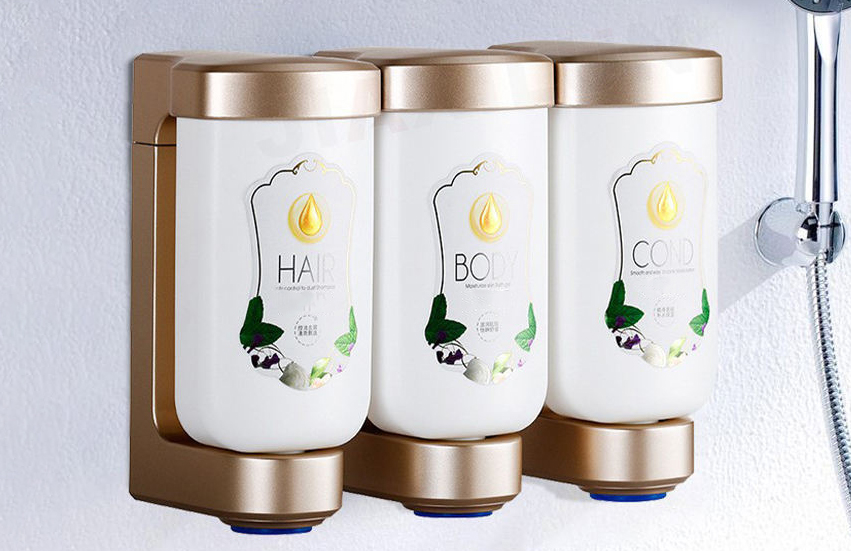
Leakage is one of the most underestimated problems in commercial washrooms. A few drops under a soap dispenser may seem minor, but over time they can stain a wall, create sticky residue around a basin, increase cleaning labor, waste soap, damage labels or finishes, and make an otherwise premium bathroom look poorly maintained. In hotels, offices, gyms, schools, serviced apartments and public facilities, the same small problem can repeat across dozens or hundreds of installed units.
That is why our approach to a wall-mounted manual soap dispenser begins with a simple principle: a dispenser should not be marketed as “leak-proof” just because it survives a short factory check. Long-term leak resistance depends on how the pump, valve, seals, reservoir, cap, joints and mounting system behave after repeated use, chemical exposure, temperature change and long periods in humid environments.
In 2026, this engineering focus matters even more because commercial buyers increasingly compare lifecycle performance rather than only purchase price. A manual wall-mounted dispenser has the advantage of a mechanically simple architecture, but simplicity alone does not guarantee quality. The real advantage appears when that simplicity is combined with controlled sealing geometry, suitable elastomer selection, stable molding tolerances, anti-drip valve design, replaceable components and application-specific testing.
Our company supports both OEM and ODM development for global commercial channels. We can customize reservoir capacity, pump type, dose, button force, seal material, valve structure, wall bracket, liquid-level window, lock, color, logo and packaging, while designing a test program around the actual soap, shampoo, body wash or hand-cleaning product the buyer intends to use.
1. Why humid bathrooms are a demanding environment for dispensers
The U.S. Environmental Protection Agency explains that moisture control is central to indoor environmental management and recommends keeping indoor relative humidity below 60% where possible, ideally between 30% and 50%. It also specifically recommends running bathroom fans or opening windows during showering because bathrooms generate substantial moisture.
This matters to dispenser design because a wall-mounted unit may spend years beside a basin, shower or wet-room wall. It may be exposed to repeated condensation, splash water, steam, cleaning chemicals and temperature changes. Even when the soap reservoir itself is sealed, external humidity can affect metal springs, screws, decorative panels, adhesive labels and poorly protected joints.
A product intended for long-term bathroom use therefore needs more than a pump that works in dry laboratory air. It needs material and structural decisions that reflect the actual environment.
2. The market already rewards wall-mounted durability and operational efficiency
Mordor Intelligence estimates the global soap dispenser market at approximately USD 2.13 billion in 2026, up from USD 2.01 billion in 2025, and forecasts around USD 3.01 billion by 2031. In 2025, wall-mounted dispensers represented 62.31% of market revenue.
The report links wall-mounted formats with space efficiency, organized placement, secure installation, larger refill capacities, controlled dispensing and lower refill frequency. It also notes continuing product improvements in refill systems, transparent level indicators, anti-drip mechanisms and compact structures.
These trends are directly relevant to leak prevention. A commercial buyer does not want only a wall-mounted container. The buyer wants a system that stays fixed, remains clean, delivers a consistent amount, does not drip excessively and can be serviced quickly.
3. “Leak-proof” should be treated as an engineering target, not an absolute slogan
No responsible manufacturer should promise that every dispenser will remain perfectly leak-free under every liquid, temperature, installation condition and service life unless those conditions have been defined and tested.
Soap viscosity varies. A thin liquid hand soap can move through a valve very differently from thick shampoo. Alcohol-containing products can affect some elastomers differently from mild surfactant solutions. A pump mounted perfectly vertical may behave differently if the wall bracket is distorted.
For this reason, we prefer claims such as “engineered to minimize leakage and dripping under specified test conditions” and then define those conditions. This is stronger than an unsupported absolute claim because the buyer can ask what was actually tested.
4. The first sealing zone: reservoir-to-pump connection
One of the most common leak paths is the connection between the liquid reservoir and the pump assembly. This joint may use threads, a bayonet fitting, a snap-fit collar or a gasketed interface.
If the joint is too loose, liquid can migrate through the clearance. If it is too tight, the seal may be over-compressed or the plastic thread may deform. If molding tolerances vary from batch to batch, one production lot may seal well while another becomes inconsistent.
In OEM and ODM projects, we define mating dimensions, thread engagement, gasket thickness and assembly torque or closure position. We also inspect the joint after repeated disassembly because hotel or office staff may refill the dispenser many times during its service life.
5. The second sealing zone: pump chamber and check valves
A manual dispenser normally relies on one or more one-way valves. During a press, liquid moves toward the outlet. During return, the chamber refills from the reservoir.
If an inlet valve does not close correctly, liquid can flow backward. If the outlet valve closes slowly, residual liquid may continue to drip from the nozzle. If the valve material swells after chemical exposure, its closing geometry can change.
Our development therefore examines valve hardness, thickness, seat geometry, return speed and surface finish. The goal is fast closure without creating excessive button force.
6. The third sealing zone: nozzle and anti-drip geometry
Many customers describe a dispenser as “leaking” when the actual problem is post-dispense dripping rather than reservoir leakage. The distinction matters because the engineering solution is different.
Post-dispense dripping is affected by nozzle diameter, chamber pressure, valve response, fluid viscosity and residual liquid volume. A nozzle that is too large may continue to release liquid under gravity. A nozzle that is too small can increase pumping resistance or become easier to clog.
We can tune the outlet geometry for liquid soap, foam soap, shampoo or body wash rather than using the same nozzle for every formula.
7. Seal material selection must match the liquid
ASTM D471 is a recognized test method for evaluating how rubber and rubber-like materials change after exposure to liquids. ASTM notes that seals and gaskets may lose performance when exposed to service fluids and that controlled testing provides comparative data for material selection and quality control.
ISO/TR 7620 provides additional guidance for classifying the chemical resistance of rubber materials in contact with acids, alkalis, aqueous solutions, oils and solvents.
The practical lesson is clear: an O-ring or valve that works with water is not automatically proven for every hand soap, shampoo or cleaning formulation.
For OEM projects, the buyer can provide the target liquid. For ODM projects, we can test several candidate elastomers and compare swelling, mass change, hardness and sealing behavior before choosing the final material.
8. Why EPDM, silicone, NBR and other elastomers cannot be treated as interchangeable
Different elastomers have different strengths. Some perform well with hot water and aqueous solutions; others are better suited to oils or specific chemicals. A sealing material that performs well in one formulation may soften, harden or swell in another.
Professional sealing guides from Parker and Trelleborg emphasize that material compatibility must be evaluated against the actual media, temperature and application conditions. They also warn that laboratory compatibility information does not replace application-specific validation.
Our policy is therefore to define the actual soap or cosmetic liquid first, then select the sealing compound. We do not choose a gasket only because it is inexpensive or widely available.
9. Compression set: a seal may look fine but gradually lose contact pressure
An elastomeric gasket works because it is compressed between two surfaces. Over time, some materials do not fully recover after long compression. This behavior is known as compression set.
ASTM D395 provides standard methods for evaluating compression set in rubber materials. For a dispenser, excessive compression set can reduce the contact pressure that originally blocked a leak path.
That is why seal design must balance three factors: the material, the amount of compression and the groove geometry. Too little compression may not seal. Too much compression can accelerate deformation or make assembly difficult.
10. Seal groove geometry is as important as seal material
An expensive O-ring in a poorly designed groove can still fail. The groove must keep the seal in the correct position and provide enough space for controlled deformation.
If the seal twists during assembly, is pinched by a sharp edge, or is stretched excessively, long-term performance can decline. Parker’s O-ring guidance emphasizes the relationship between seal compression, hardness, geometry and material selection.
In our ODM process, groove depth, corner radius, draft angle and assembly path are reviewed together rather than independently.
11. Plastic molding tolerance directly affects leakage
A reservoir neck, pump collar and sealing surface are usually injection-molded plastic components. Molding shrinkage, warpage, sink marks and flash can change the seal interface.
A sealing face must remain flat enough for the gasket to contact consistently. A thread must have stable pitch and diameter. A snap-fit must close to the same position across production lots.
We identify critical-to-quality dimensions on drawings and inspect them separately from purely cosmetic dimensions. This avoids over-controlling every surface while protecting the parts that actually determine leak performance.
12. Surface finish matters on the sealing face
A gasket cannot compensate for every molding defect. A deep parting line, scratch or sink on the sealing surface can create a microscopic path for liquid migration.
During tool development, we review gate position, parting line, ejector location and polishing around the seal interface. If a sealing face is damaged during assembly, the defect may not be visible from outside but can still cause leakage.
For high-volume commercial projects, this area can be included in incoming or in-process visual inspection standards.
13. Pump return spring and metal components need humidity consideration
Bathroom humidity does not only affect seals. Springs, screws and mounting hardware may be exposed to condensation or cleaning products.
For metal components we select material and surface treatment according to the target environment. Stainless-steel grades, plated carbon steel and other options have different cost and corrosion behavior.
ASTM B117 provides a controlled salt-spray environment for comparing relative corrosion resistance of metals and coated metals. We can use this type of accelerated corrosion screening when appropriate, especially for coastal hospitality or high-moisture projects. However, salt-spray hours should not be converted directly into years of bathroom service because laboratory and real-world conditions differ.
14. Wall mounting stability affects sealing indirectly
A dispenser that flexes every time the button is pressed may place unwanted stress on the reservoir and pump joints. The leak may appear to be a gasket problem when the root cause is an unstable wall bracket.
We therefore treat the backplate, anchor points, housing stiffness and pump axis as one system. Repeated pressing loads are applied in the same direction as real use.
For drywall, tile, concrete or other substrates, the installer must use appropriate anchors. The dispenser manufacturer should not claim one fastener is universally suitable for every wall.
15. Humidity-resistant design begins with drainage, not only sealing
Trying to seal every external cavity can sometimes trap water rather than solve the problem. A better design may allow incidental splash water to drain away from sensitive areas.
We can add drainage channels, sloped surfaces, protected screw locations and ventilation gaps where appropriate. These features keep external moisture from pooling around the pump or backplate.
The internal soap reservoir still requires controlled sealing, but the outer housing can be designed to manage bathroom moisture rather than simply trapping it.
16. Transparent level windows must also be sealed correctly
A large liquid-level window helps staff check the reservoir without opening the dispenser. But the window itself can become another joint.
Options include co-molding, ultrasonic welding, adhesive bonding or mechanical retention with a gasket. The best method depends on resin combination, appearance requirements and service conditions.
During validation, we inspect not only whether the window remains attached but whether the interface develops seepage or stress cracking after chemical exposure.
17. Locking covers require a balance between security and sealing
Commercial dispensers often use a key or latch to prevent unauthorized opening. The cover must close firmly enough to protect the reservoir but not distort the pump or tank.
An overly stiff latch can bend the housing and create misalignment. A weak latch can allow the cover to loosen under repeated use.
We can standardize one key across multiple sizes, reducing spare-part complexity for hotel or office facility teams.
18. Refill method changes the leak-risk profile
Bulk-fill, removable inner bottle and sealed cartridge systems each have different leak paths.
A bulk-fill tank reduces packaging and allows flexible soap sourcing, but it requires clean filling procedures and reliable reservoir joints. A removable inner bottle can simplify cleaning and replacement. A sealed cartridge can reduce handling of the liquid but creates dependence on a specific cartridge supply chain.
We do not claim one system is always best. The right choice depends on hygiene policy, refill labor, supplier strategy and liquid compatibility.
19. Overfilling can create false leak complaints
If a reservoir is filled beyond the intended level, liquid may contact vents, caps or pump interfaces that are not designed to remain submerged. Temperature expansion can also increase internal pressure.
For this reason, our tank design can include a visible MAX line and sufficient headspace. The refill instruction should show the correct level clearly.
Reducing misuse is part of leak-prevention engineering.
20. Viscosity must be tested, not guessed
A pump developed around low-viscosity hand soap may behave differently with thick body wash. High viscosity can slow chamber refill and increase residual pressure at the outlet.
For each commercial program, we can define a viscosity range or test the customer’s actual product. We record dose, return time, dripping and priming behavior.
This is especially important for hotel systems that use the same dispenser family for hand soap, shampoo and body wash.
21. Dose control can reduce mess around the basin
Very large doses increase the chance that excess soap runs from the hand onto the basin or wall. But excessively small doses may cause repeated pumping.
The best dose is the one that provides enough product for the intended use with a reasonable number of activations. We therefore tune chamber volume and stroke rather than automatically minimizing output.
In ODM programs, several pumps can be compared using real users or controlled repeat tests before final selection.
22. Static leak testing: the first gate
A filled dispenser can be held in its normal wall orientation for a defined period and inspected at all joints. This simple test identifies obvious leakage from the tank, cap, window and pump interface.
We can also test at maximum fill level and after temperature conditioning. The test fluid should represent the real formulation as closely as practical.
Static testing is necessary, but it is only the beginning.
23. Dynamic pumping test: leakage after repeated use
A dispenser that is dry for the first 20 strokes may begin to drip after thousands of cycles. Dynamic testing therefore repeats pumping while monitoring dose, return speed, joint condition and nozzle behavior.
The target cycle count should be defined according to expected commercial use, warranty objectives and product tier. We do not select an impressive number only for marketing.
After cycling, the product is rechecked for static leakage.
24. Temperature-cycle testing: expansion and contraction matter
Bathroom and logistics temperatures can change. Plastic, metal and elastomer expand at different rates. A seal that is perfect at room temperature may experience a different compression level after heating or cooling.
We can condition assembled dispensers through agreed temperature cycles and then repeat leak tests. For export projects, transportation and warehouse temperatures can also be considered.
25. Chemical immersion and pump-cycle testing
ASTM D471 shows why liquid exposure can change rubber mass, volume, hardness and mechanical properties. In a dispenser, we convert that principle into an application-level test.
Candidate seals, valves and pump components are exposed to the target formulation. The finished pump is then cycled and evaluated for leakage, swelling, sticking, cracking or dose change.
This combination of material screening and finished-product testing provides more meaningful evidence than either method alone.
26. Compression-set monitoring for long-life programs
Where a gasket remains compressed for years, we can use compression-set data as part of material comparison. ASTM D395 provides a recognized framework for this property.
The result is not a direct promise of service life, but it helps compare candidate elastomers and identify materials more likely to retain sealing force under prolonged compression.
27. Corrosion testing for humid or coastal markets
For hotels near the sea, cruise-related facilities or tropical coastal markets, metal corrosion can become more relevant. Salt spray can be used as a comparative screening method for springs, screws, brackets or decorative metal panels.
ASTM B117 is widely used for generating controlled corrosive conditions and comparing metal or coating resistance. But we clearly state that laboratory salt-fog exposure does not equal a specific number of real-world years.
For buyers, the value lies in comparing material options under the same test rather than turning test hours into an unrealistic lifetime claim.
28. Humidity-aging test for the complete dispenser
Because bathroom moisture affects the entire assembly, not just individual materials, we can condition complete units at elevated humidity and then inspect pump function, corrosion, label adhesion, window clarity, locking performance and leakage.
This is especially useful when the project includes decorative coatings, printed logos or adhesive labels that must remain presentable for years.
29. Hotel scenario: hand soap at the basin
In a hotel guest bathroom, the basin dispenser is used frequently but must also look clean. A slow drip can create a visible soap trail on the wall or vanity.
For this application we recommend a controlled-dose pump, anti-drip outlet, visible level window, easy service access and a housing surface that tolerates routine cleaning.
The capacity should reflect housekeeping frequency rather than simply maximizing volume.
30. Hotel scenario: shampoo and body wash in the shower
A shower-area dispenser faces more direct moisture than a basin unit. The wall bracket, lock, pump spring and decorative finish need stronger humidity consideration.
A dual-head unit can separate shampoo and body wash. Independent reservoirs make it possible to refill only the product that is low.
We can adjust valve and nozzle geometry for different viscosities rather than assuming both liquids behave the same.
31. Office scenario: standardized floor-by-floor maintenance
In a multi-floor office, standardization lowers complexity. One dispenser platform can use the same pump, key and bracket across several capacities.
Facility staff can carry a small set of spare pumps instead of replacing complete housings. The visible level window makes inspection faster.
This is where manual wall-mounted architecture can create operational value beyond the purchase price.
32. Gym and fitness scenario: humidity plus high traffic
Gyms combine frequent use, showers, heat and moisture. The dispenser may be activated many times per day and cleaned with stronger products than in a typical home.
For this channel, pump-cycle durability, corrosion-resistant hardware, chemical compatibility and secure mounting become especially important.
We can develop a more robust commercial grade without changing the basic manual user experience.
33. OEM: customize a proven sealing platform quickly
Our OEM service is designed for hotel suppliers, commercial hygiene distributors, office facility suppliers, private-label brands, wholesalers and e-commerce sellers that want to launch quickly using an established platform.
OEM options can include:
300 ml, 500 ml, 800 ml and 1000 ml capacities;
single, dual or triple reservoir formats;
liquid-soap or foam pumps;
target dose per stroke;
pump actuation force;
PP, ABS, stainless steel or hybrid housings;
EPDM, silicone or other validated seal options;
transparent level-window size and position;
lock and common service key;
anti-drip nozzle configuration;
wall-bracket design;
Pantone color;
printed, laser or molded logos;
retail, e-commerce or B2B packaging;
multilingual labels and instructions.
34. ODM: redesign the leak path from the root cause
ODM becomes valuable when a customer has a specific leakage problem. Instead of changing only the exterior, we analyze where the liquid is escaping.
If the pump collar leaks, we review gasket compression and thread geometry. If the nozzle drips, we review valve closure and outlet diameter. If the window joint seeps, we change the joining method. If the wall flexes under pressing, we reinforce the backplate.
The ODM process therefore begins with failure analysis, not styling.
35. OEM/ODM for different liquid families
A single housing can be adapted for hand soap, shampoo, body wash and foam applications, but the pump and seal specification may need to change.
We can create a platform where the outer appearance remains consistent while internal pump modules are application-specific. Hotels benefit because the bathroom looks unified while each liquid receives a suitable dispensing mechanism.
36. Quality control at production scale
A prototype passing a leak test does not prove that every mass-produced unit will behave the same. Production control is therefore essential.
We can define incoming inspection for seals and springs, dimensional control for reservoir necks and pump collars, assembly checks for gasket position, sampling leak tests and final functional pumping.
For larger programs, lot traceability links production date, material batch, pump batch and inspection results.
37. Preventing assembly damage to seals
Even a well-designed seal can be cut or twisted during assembly. Sharp edges, excessive insertion force and dry friction can damage the elastomer.
We review assembly fixtures and operator sequence, add lead-in chamfers where needed and use poka-yoke features to prevent incorrect gasket orientation.
Leak prevention therefore belongs to manufacturing engineering as much as product design.
38. Packaging protects the sealing system before installation
A pump can be damaged before the dispenser reaches the wall. If the package allows the nozzle or button to take repeated impact, internal valve alignment may change.
We design inner supports around sensitive areas and evaluate drop, vibration and carton compression for export programs.
Packaging volume is optimized, but not at the expense of protecting the pump.
39. What international buyers should ask before choosing a dispenser
Which leakage paths have been identified in the design?
What seal material is used and why?
Has the seal been tested with the actual liquid?
What compression-set data is available?
How is the reservoir-to-pump joint controlled?
Is the outlet anti-drip design validated by cycling?
What is the dose and how stable is it?
How many pump cycles have been completed under the agreed protocol?
Has the complete unit been humidity-conditioned?
Are metal components screened for corrosion where needed?
Can the pump be replaced separately?
Can the same spare pump fit several capacities?
Is there a visible MAX fill line?
Does the wall bracket resist repeated pressing load?
Can the supplier provide lot traceability?
40. Why manual wall-mounted dispensers remain a strong long-term commercial choice
Mordor Intelligence shows that wall-mounted dispensers already represented 62.31% of the market by revenue in 2025, and the wider soap-dispenser market continues to grow. The reason is not simply that wall-mounted products save counter space. Commercial buyers value fixed installation, larger capacity, controlled dispensing and operational efficiency.
In humid bathrooms, those advantages only matter if the dispenser remains reliable. EPA guidance reminds us that bathrooms are moisture-intensive environments. ASTM and ISO guidance show that seals and elastomers can change after exposure to liquids and prolonged compression. These are not abstract engineering issues; they are directly connected to dripping, seepage, pump sticking and premature failure.
Our solution is to treat leak resistance as a complete system. We optimize gasket material, compression, groove geometry, valve response, pump recovery, nozzle size, molded tolerances, drainage, wall stiffness and chemical compatibility together.
Conclusion
In 2026, the best commercial wall-mounted manual soap dispenser is not the one with the strongest “100% leak-proof” slogan. It is the one whose sealing structure has been designed, tested and controlled with the actual bathroom environment in mind.
A durable system begins with the reservoir-to-pump joint, continues through check valves and nozzle geometry, and depends on the correct elastomer for the liquid. Compression set, chemical swelling, plastic warpage, corrosion, wall movement and overfilling can all change leak behavior over time.
That is why our company combines product design with validation. We can run static leak testing, dynamic pump cycling, chemical exposure, temperature cycling, humidity conditioning, corrosion screening, wall-load testing and transport testing according to the project.
For OEM buyers, we provide fast customization of capacity, pump, seal, color, logo, level window, lock, bracket and packaging. For ODM buyers, we can redesign the sealing path, reservoir connection, valve, nozzle, internal drainage and service structure from the root cause.
For hotels, offices, gyms and other humid commercial bathrooms, the result is a more practical long-term product: fixed on the wall, easy to refill, easy to inspect, simple to service and engineered to minimize leakage under defined operating conditions.
wall mounted manual soap dispenser · leak resistant soap dispenser · anti drip soap dispenser · commercial soap dispenser · hotel soap dispenser · office washroom dispenser · humid bathroom soap dispenser · durable wall soap dispenser · manual liquid soap dispenser · manual foam soap dispenser · shampoo wall dispenser · body wash wall dispenser · dual chamber wall dispenser · triple chamber wall dispenser · replaceable pump dispenser · sealed reservoir dispenser · anti leak pump valve · soap dispenser gasket · EPDM seal dispenser · silicone seal dispenser · transparent level window dispenser · lockable soap dispenser · large capacity wall dispenser · low maintenance soap dispenser · soap dispenser OEM · soap dispenser ODM · private label soap dispenser · custom dispenser capacity · custom pump dose · custom seal material · custom dispenser color · custom dispenser logo · custom dispenser packaging · soap dispenser leak test · pump cycle durability test · seal chemical compatibility test · humidity aging dispenser test · hotel amenities importer · commercial hygiene distributor · soap dispenser manufacturer



