


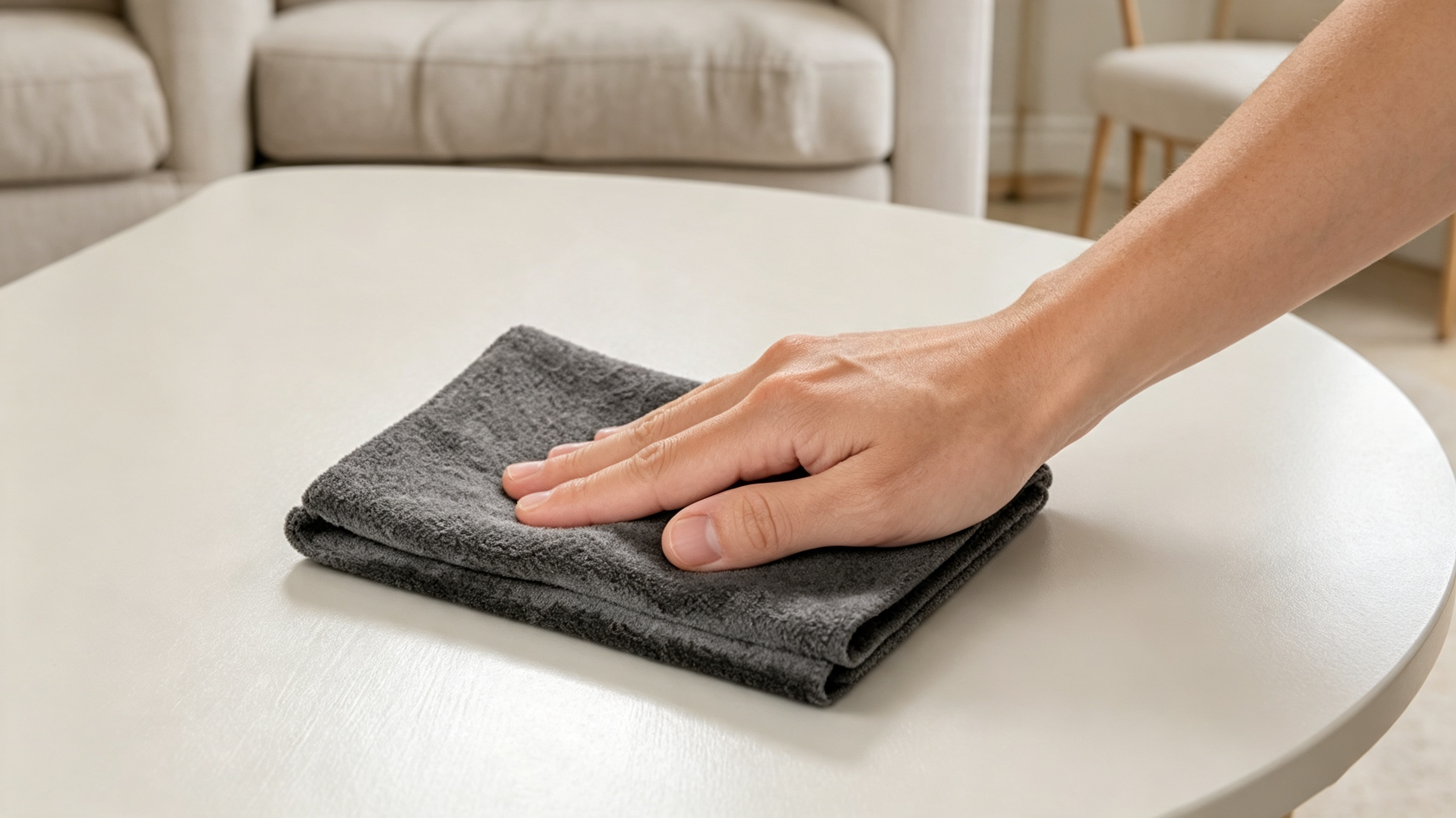
A household cleaning cloth spends much of its working life in contact with water. It wipes a wet kitchen counter, absorbs splashes around the sink, removes condensation from bathroom surfaces, collects dust from furniture, and then often remains folded beside a faucet or compressed inside a container. The cleaning task may take only a few minutes, but the period after use determines whether the cloth stays fresh, dries efficiently, and remains suitable for repeated use.
This is why quick-drying construction and carefully validated antibacterial or odor-control treatments have become important product-development directions in the global home-care market. Consumers are not only asking whether a cloth can absorb water on the first pass. They also want to know how fast it releases moisture, whether it develops a persistent smell, whether it leaves lint or streaks, how it performs after repeated washing, and whether one cloth can serve several everyday cleaning tasks.
Grand View Research estimates that the global microfiber cloths and wipes segment generated approximately USD 972.8 million in revenue in 2024 and may reach about USD 1.6765 billion by 2030, representing a forecast compound annual growth rate of 9.5% from 2025 to 2030. The same research organization estimates that the broader antimicrobial textiles market will reach about USD 14.6 billion in 2026 and USD 19.0 billion by 2030. These figures cover much broader categories than household multipurpose cloths, so they should not be presented as a sales forecast for one specific product. They do, however, demonstrate strong commercial interest in reusable microfiber cleaning tools and functionally treated textiles.
No international authority publishes a single official percentage showing how many households have adopted quick-dry antibacterial cleaning cloths. Therefore, this article does not invent a global penetration rate. Instead, it examines the verified conditions driving demand: concern about dampness and odor, the need to wash and fully dry reusable cloths, interest in reusable cleaning tools, and increasingly strict rules governing antimicrobial claims.
1. Why a wet cleaning cloth can become an everyday household problem
Moisture, organic residue, and time create unfavorable conditions
A used cloth may contain water, cooking oil, food particles, detergent residue, skin oils, dust, and other organic material. When that cloth remains wet and receives little airflow, odor-causing microorganisms can multiply more easily. The result may be a sour or musty smell, discoloration, surface slime, or visible fungal growth in severe cases.
The World Health Organization’s guidelines on indoor dampness and mould explain that microbial pollution is associated with sufficient moisture and that dampness supports the growth of bacteria and fungi indoors. The WHO document focuses on buildings and indoor environments rather than cleaning cloths, but its central principle is directly relevant to product design: moisture control is fundamental when trying to limit conditions that support microbial growth.
The U.S. Environmental Protection Agency expresses the same principle in its household mold guidance: the key to mold control is moisture control, and damp materials should be dried quickly. EPA commonly advises drying wet materials within 24 to 48 hours to reduce the likelihood of mold growth. A cleaning cloth is much smaller than a wall, carpet, or furnishing and should ideally dry far sooner than that. The guidance does not certify a particular textile, but it reinforces why rapid water release and complete drying matter.
Odor is often a usage signal, not merely a fragrance problem
Some low-quality products attempt to mask odor with perfume. This does not remove retained soil or moisture. A cloth that smells unpleasant after washing may contain embedded grease, detergent build-up, microbial residue, or fibers that dry too slowly under normal household conditions.
Our product philosophy is to manage the causes before adding fragrance. Fiber structure, yarn quality, fabric density, thickness, surface area, edge construction, and hanging design all influence how quickly water can leave the cloth. Where an antibacterial finish is required, it should support protection of the textile and odor management under defined conditions, not hide poor drying performance.
Mold prevention depends on the whole household routine
No cleaning cloth can guarantee that mold will never appear in a kitchen or bathroom. Leaks, high indoor humidity, condensation, poor ventilation, wet grout, damaged sealant, and water trapped under fixtures must be corrected separately. A quick-drying cloth helps prevent the cloth itself from remaining damp for unnecessarily long periods, but it cannot solve a building moisture problem.
Responsible product communication should therefore say that the cloth is designed to dry rapidly and reduce conditions associated with persistent damp odor. Claims such as “mold-proof home,” “kills all mold,” or “prevents respiratory disease” require a completely different regulatory and scientific basis and should not be printed on an ordinary household cleaning textile.
2. Quick drying is an engineered balance, not simply a thin fabric
Absorption and drying speed pull in opposite directions
A thick, high-GSM textile can absorb a large quantity of water, but it may retain that water for a longer period. A very thin textile dries quickly but may become saturated after wiping only a small spill. The most useful household product balances initial absorption, release during wringing, and drying after hanging.
For this reason, GSM alone does not define quality. Two cloths with the same weight can behave differently because of yarn fineness, fiber blend, knitting structure, finishing, and loop height. Our OEM and ODM development compares three separate performance indicators: how quickly the dry cloth takes up water, how much water it can hold, and how much moisture remains after standardized wringing.
Open structures improve airflow
Waffle, mesh, channel, diamond, and low-loop constructions create pathways through which air can circulate. They also increase surface area, allowing water to spread into a thinner film that evaporates more efficiently. A tightly compacted pile may feel luxurious but can trap water in the interior.
Our engineers can adjust knit density, pore geometry, loop length, and fabric thickness according to the target environment. A humid tropical market may prioritize a lighter open structure and a hanging loop. A colder, drier market may accept a denser cloth that holds more water. A hotel or professional cleaning customer may require a structure compatible with industrial laundering.
Wringing recovery matters as much as evaporation
Consumers frequently rinse and wring a cloth several times during one cleaning task. If the material releases water easily and recovers its shape, the user can continue working without replacing it. If the cloth remains waterlogged, it spreads diluted soil across the next surface and takes longer to dry afterward.
We can measure residual moisture after a controlled wringing force, dimensional recovery, and absorbency during repeated wet-and-wring cycles. This gives buyers a more useful specification than a general statement such as “super absorbent.”
3. What “antibacterial fabric” should mean in a household cleaning product
Antibacterial performance must be measured
ISO 20743:2021 specifies quantitative test methods for determining antibacterial activity in textile products, including nonwovens and household textile materials. A manufacturer that wants to claim antibacterial performance should define the test organism, method, untreated control, reduction result, conditioning, and number of wash cycles after which the effect is evaluated.
A result on an unused fabric does not automatically prove that the finish remains effective after repeated laundering. For a reusable cleaning cloth, durability is essential. We can arrange testing on initial samples and again after an agreed number of washes, such as 20, 50, or 100 cycles, depending on the product grade and intended claim.
Protecting the cloth is different from protecting human health
The U.S. Environmental Protection Agency’s treated-article policy makes an important distinction. An article treated with an antimicrobial pesticide may qualify for a limited exemption when claims are restricted to protecting the article itself, for example by helping control odor-causing bacteria or material deterioration. Claims that the product controls specific human pathogens or protects users from illness go beyond that limited purpose and can require pesticide registration.
EPA also notes that antimicrobial-treated textiles do not necessarily prevent cross-contamination and that users must continue normal washing and hygiene practices. This is particularly important for a multipurpose cloth. Even a tested treatment does not make a dirty cloth suitable for wiping a food-preparation surface, a bathroom fixture, and a child’s table without washing between uses.
European rules also regulate treated articles
Under the European Union’s Biocidal Products Regulation, articles treated with or incorporating a biocidal product are subject to specific conditions. The European Commission and the European Chemicals Agency explain that relevant active substances must be approved for the intended purpose, and labeling requirements may apply when a treated article makes a biocidal claim.
For an EU private-label project, we therefore confirm the active substance, supplier documentation, permitted product type, concentration, labeling language, and claim wording before production. A finish that is accepted in one region should not be assumed to be automatically acceptable in another.
Antibacterial does not mean sterilizing
A consumer textile is not a sterile medical device. An antibacterial result under a laboratory method does not mean that the cloth instantly disinfects every surface. Actual performance is influenced by soil load, contact time, moisture, detergent, temperature, fabric wear, and washing history.
Our recommended claim hierarchy is conservative and measurable: “quick-drying,” “washable and reusable,” “designed to help reduce persistent damp odor,” and, when supported by testing and regulation, “antibacterial-treated fabric helps protect the cloth from odor-causing bacteria.” Stronger claims are considered only when the customer has the required registration and evidence.
4. Material options for rapid drying and household durability
Split microfiber blends
Polyester and polyamide microfiber blends are widely used because fine split fibers provide a large contact area, collect dust and oily residue, and dry more quickly than many heavy cotton fabrics. Polyester contributes strength and interaction with oily soil, while polyamide can improve softness and water absorption.
The exact ratio should reflect the task. A higher polyamide content may improve absorbency and hand feel but can increase cost and alter drying behavior. Fiber splitting quality, yarn consistency, and finishing are as important as the nominal blend percentage.
Waffle microfiber
A waffle construction creates small pockets and raised lines. It can absorb spills, move water away from a surface, and expose more area to air. It is often suitable for kitchens, sinks, bathrooms, and general wiping.
The depth of the waffle must be controlled. Deep pockets can trap food residue and become harder to rinse. Our designs aim for a pattern that improves water handling while remaining easy to flush clean.
Low-pile multipurpose fabric
Low-pile cloths are appropriate for appliances, stainless steel, furniture, and areas where lint must be minimized. They usually dry quickly because they hold less water than long-loop fabrics. A dual-surface design can combine a slightly textured cleaning side with a smoother finishing side.
Cellulose and cotton blends
Cellulose-based sponge cloths and cotton blends can offer strong water uptake and a familiar natural feel. However, drying speed, shrinkage, stiffness after air drying, and resistance to repeated bending must be tested. Natural origin does not automatically guarantee lower environmental impact or antibacterial behavior.
Where customers prefer cellulose or cotton, we compare wet strength, dimensional change, odor retention, edge wear, and packaging stability. A mixed-material design may balance absorbency and drying, but it can also complicate recycling claims.
Recycled synthetic content
Recycled polyester may help reduce reliance on virgin feedstock, but traceability, color consistency, odor, strength, and microfiber shedding require control. Recycled content should be supported by appropriate documentation if displayed on packaging.
The European Environment Agency notes that synthetic textiles can release microfibers during manufacturing, use, washing, and drying. For that reason, we treat low-lint construction, yarn quality, edge sealing, and wash-loss testing as environmental as well as performance considerations.
5. Fabric construction that supports household hygiene
A hanging loop prevents the cloth from remaining folded
A small loop has a large practical effect. It allows users to hang the cloth where air can reach both sides, instead of leaving it compressed beside the sink. The loop must be positioned so that the fabric hangs open and must withstand repeated pulling and washing.
We can use woven labels, sewn loops, integrated knitted holes, or reinforced corner tabs. The best option depends on fabric thickness, desired appearance, and target price.
Rounded corners reduce soil traps
Sharp corners and bulky seams can retain food particles. Rounded corners with a consistent overlock or ultrasonic edge are easier to rinse. A bound edge is durable but may dry more slowly if it contains multiple layers.
For glass and mirror cloths, a thick stitched edge may create drag or contact marks. For heavy kitchen use, durability may be more important. OEM customers can choose different edge systems for different product families.
Color coding reduces cross-use
CDC guidance for reusable cleaning materials supports cleaning after use, complete drying, and separation by task. Color coding makes this easier in a household. One color can be assigned to food-preparation surfaces, another to bathrooms, another to glass and mirrors, and another to furniture or automotive interiors.
Color should be supplemented with an icon or woven label for users who cannot reliably distinguish colors. We can add numbers, room symbols, text, or textured corner markers.
Two-sided or zoned surfaces increase versatility
A multipurpose cloth may combine a textured side for grease and dust with a smoother low-lint side for finishing. Another design can use alternating bands: absorbent channels for spills and flat zones for polishing.
The two sides must remain dimensionally balanced. If one shrinks more than the other, the cloth curls after washing. ODM development therefore includes shrinkage and skew testing after repeated laundering.
6. Why quick drying can help with odor control
Shorter wet time reduces the opportunity for odor development
Odor does not come from water alone. It develops when retained moisture combines with soil and microorganisms. A cloth that releases water and dries between uses provides a less favorable environment than one that remains damp for many hours.
This does not mean quick drying kills bacteria. It is a moisture-management feature. The cloth must still be rinsed or washed to remove soil. Quick drying works best as one part of a system that includes proper cleaning, wringing, hanging, and replacement when the textile is damaged.
Antibacterial treatment can protect the textile under defined conditions
A properly tested treatment may reduce the growth of selected bacteria on the fabric and help control odor associated with that growth. It cannot compensate for heavy food contamination or improper storage. If a cloth has been used on raw meat juices, pet waste, or a high-risk spill, it should be handled according to appropriate food-safety or hygiene guidance rather than simply hung to dry.
Fragrance-free products can be a stronger premium proposition
Some consumers prefer fragrance-free cleaning products due to personal sensitivity or because they do not want a scent transferred to kitchen surfaces. A cloth that controls damp odor through drying performance and tested textile protection can be positioned without added perfume.
OEM packaging can explain the mechanism clearly: rinse thoroughly, wring, hang open, wash regularly, and dry completely before storage.
7. Household applications and correct use
Kitchen counters and dining tables
The cloth can collect crumbs, absorb splashes, and remove light grease with a compatible detergent. A separate color should be reserved for food-preparation areas. After contact with raw meat, poultry, fish, or eggs, the textile must be washed appropriately before reuse.
The U.S. Department of Agriculture advises washing surfaces that contact raw animal products with hot, soapy water and washing dishcloths frequently using the hot cycle of the washing machine, where the fabric care instructions permit it.
Sinks and faucets
A waffle or channel side can remove water around the sink, while a smoother side can finish stainless steel. Mineral deposits may require a suitable cleaning product. Acidic and chlorine-based cleaners must never be mixed.
Bathrooms
Quick drying is particularly valuable in humid bathrooms. The cloth can wipe condensation, tiles, basins, and shower glass. A bathroom cloth should not later be used in the kitchen. After use, it should be washed, wrung, and hung where ventilation is available.
Mirrors and glass
A low-lint side can remove residual moisture and cleaning solution, reducing visible streaks. “Polishing” here means final wiping, not abrasive removal of scratches. The cloth must be free from sand and hard particles before use on sensitive surfaces.
Furniture and appliances
A dry or slightly damp microfiber surface can collect dust from shelves, appliance exteriors, and furniture. High-gloss coatings, screens, optical lenses, and specialty finishes require the manufacturer’s recommended method and a test in an inconspicuous area.
Automotive interiors
A household multipurpose cloth may work on selected interior plastics and glass. Vehicle paint, instrument displays, leather, and coated trim may need specialized cloths. Our ODM range can include separate automotive-grade products with controlled pile and edge construction.
8. Washing and maintenance determine real product life
Reusable cloths must be cleaned after use
The CDC states that reusable mops and cloths should be cleaned after use and allowed to dry before reuse. This principle prevents soil from being carried into the next task and helps maintain the fabric.
For light household soil, thorough rinsing followed by scheduled machine washing may be suitable. For heavy grease, food residue, or bathroom contamination, the cloth should be laundered promptly according to the care label.
Water temperature must match the textile specification
Hot washing can support hygiene, but excessive heat can damage certain synthetic fibers, adhesive laminations, antimicrobial finishes, printed logos, or edge treatments. We establish a care temperature after testing the complete finished product rather than relying only on the raw-fabric supplier’s data.
Fabric softener may reduce microfiber performance
Some fabric softeners can leave a coating on fine fibers and reduce water uptake or soil collection. When this risk applies, the care label should advise users to avoid softener. Chlorine bleach and highly alkaline products may also damage some microfiber constructions or functional finishes.
The cloth must be fully dry before closed storage
A washed cloth should not be placed in a sealed drawer or container while damp. Air drying on a rack or low-temperature machine drying, where approved, can be used. Storage instructions are part of product performance, not an optional afterthought.
Replacement remains necessary
A reusable cloth does not last forever. Persistent odor after proper washing, loss of absorbency, frayed edges, permanent stiffness, delamination, discoloration, or inability to dry normally are replacement signals. OEM customers can include a simple replacement guide on the package.
9. Testing program for quick-dry and antibacterial cleaning cloths
Drying-time test: measure the time required to reach a defined residual moisture level at controlled temperature, humidity, and airflow.
Water absorption test: evaluate uptake speed and maximum capacity relative to dry weight.
Residual moisture after wringing: compare how much water remains after a standardized force.
Antibacterial activity: use an appropriate quantitative textile method such as ISO 20743 with agreed organisms and controls.
Wash-durability test: repeat antibacterial and physical performance measurements after specified laundering cycles.
Odor assessment: use a defined laboratory or panel protocol rather than an informal smell claim.
Lint and fiber-release test: evaluate loose fibers after rubbing and laundering.
Dimensional stability: measure shrinkage, skew, curling, and thickness after washing.
Colorfastness: test washing, wet rubbing, dry rubbing, detergent contact, and color transfer.
Oil and soil removal: compare performance on standardized surfaces and contamination models.
Streak evaluation: inspect glass and stainless steel after a controlled wiping procedure.
Edge durability: examine seam opening, thread breakage, ultrasonic edge damage, and loop pull strength.
Chemical compatibility: expose the cloth to specified detergents or disinfectants.
Packaging test: assess compression recovery, odor, moisture protection, and transport damage.
Test results must be linked to the actual production construction. Changing yarn, finish, dye, edge, or antimicrobial supplier can change the result and should trigger review or retesting.
10. OEM customization for fast private-label launches
Our OEM service is designed for retailers, importers, cleaning brands, supermarket chains, e-commerce sellers, hospitality suppliers, and household-goods distributors that want a proven construction under their own brand.
Available customization includes:
polyester/polyamide ratio;
virgin or documented recycled content;
waffle, loop, mesh, low-pile, suede-like, or dual-surface texture;
GSM, thickness, size, and shape;
quick-dry construction and hanging method;
antibacterial or odor-control finish where legally and technically appropriate;
single-color, multi-color, or color-coded sets;
overlock, bound, hidden, laser, ultrasonic, or edgeless construction;
woven label, embroidery, printing, embossing, or packaging logo;
two-, four-, six-, eight-, twelve-, or bulk-pack configurations;
paper band, carton, recyclable bag, sealed pouch, or B2B master pack;
barcode, care label, multilingual instructions, and traceability code.
For a fast launch, customers can select an existing fabric platform and adjust color, size, label, and packaging. Samples are confirmed before mass production, and the final specification includes measurable tolerances rather than subjective descriptions such as “very soft” or “extra fast.”
11. ODM development for differentiated functional fabrics
ODM is appropriate when the customer wants a proprietary textile rather than a standard cloth with a new logo. Development begins with the problem to be solved: high bathroom humidity, frequent kitchen washing, low-lint mirror cleaning, hospitality laundering, tropical climate, or a specific retail price.
We then define yarn fineness, split-fiber level, blend ratio, knit structure, GSM, loop height, channel geometry, antimicrobial technology, edge, size, and care conditions. Prototype versions are compared for absorption, drying, odor retention, lint, shrinkage, and surface performance.
Examples of ODM concepts include:
a waffle cleaning face combined with a low-pile finishing face;
alternating absorbent and ventilation channels;
a lightweight tropical-climate cloth with reinforced edges;
a high-durability hospitality cloth compatible with industrial washing;
a color-coded family using one common fabric platform;
a cellulose-synthetic hybrid balancing water uptake and drying;
an antibacterial-treated textile tested before and after repeated washing;
a low-shedding microfiber construction with optimized yarn and edge.
Regulatory and marketing claims are reviewed during development, not after packaging has been printed. This avoids creating a technically good product that cannot legally carry its intended wording in the destination market.
12. Regional market requirements
European Union
EU buyers increasingly request exact fiber composition, durability, packaging efficiency, chemical documentation, and evidence behind sustainability or antibacterial claims. Treated articles must follow the Biocidal Products Regulation, including requirements concerning approved active substances and labeling.
A common cloth can be supplied with separate multilingual paper bands for Germany, France, Spain, Italy, the Netherlands, and other markets. This reduces region-specific finished-goods inventory.
United States and Canada
North American retailers often prefer multipacks, clear use cases, strong online imagery, and simple care instructions. Antimicrobial claims must be reviewed against EPA requirements in the United States. Claims limited to protecting the textile are different from claims of protecting people or disinfecting household surfaces.
Japan and South Korea
Compact sizes, precise edges, neutral colors, low lint, hanging loops, and detailed usage instructions are important. Consumers may value thin fabrics that dry quickly in limited kitchen and bathroom spaces.
Southeast Asia and the Middle East
High temperature and humidity make drying speed, dye stability, packaging moisture control, and odor management important. The cloth should be tested in relevant climate conditions rather than only in a dry laboratory environment.
Australia and New Zealand
Household, hospitality, caravan, and automotive applications create opportunities for multipurpose sets. Long transport distances place additional importance on compact packaging and stable product condition after storage.
13. Responsible sustainability positioning
A washable cloth may reduce disposable paper or wipe consumption when it is used repeatedly, maintained correctly, and kept for a meaningful service life. However, no reusable textile is impact-free. It requires raw materials, dyeing, finishing, washing water, detergent, energy, and eventual disposal.
The European Commission’s Strategy for Sustainable and Circular Textiles emphasizes durability, resource efficiency, and improved product information. These principles support products that last and disclose their composition, but they also require honest communication.
We recommend measurable claims such as:
tested after a stated number of washes;
specified recycled content with documentation;
reduced packaging weight compared with a defined previous format;
quick-dry performance under stated conditions;
low-lint or fiber-loss result under an agreed method;
antibacterial performance under ISO 20743 with stated wash durability.
Broad statements such as “zero impact,” “completely eco-friendly,” or “eliminates all bacteria” should not be used without exceptional evidence.
14. What buyers should include in a specification
primary cleaning tasks and surfaces;
surfaces that require warnings or are excluded;
fiber composition and recycled-content requirement;
fabric structure on each side;
size, GSM, thickness, and color tolerance;
edge construction and hanging feature;
target drying time and test environment;
absorption and residual-moisture requirements;
antibacterial test method, organisms, result, and wash cycles;
approved claim language for each market;
wash temperature, detergent, bleach, softener, and drying instructions;
lint, shrinkage, colorfastness, and seam standards;
logo method, label, languages, packaging, and barcode;
inspection level, approval sample, and change-control procedure.
The clearer the specification, the less likely it is that a factory sample and a production shipment will feel or perform differently. Functional language must be converted into testable requirements.
15. Our supply and quality-management system
We support household, retail, e-commerce, hospitality, restaurant, office, professional-cleaning, and automotive product lines. The supply process can include yarn selection, knitting or weaving, dyeing, functional finishing, cutting, edge treatment, labeling, packaging, and final inspection.
Before production, customers can approve raw-fabric swatches, finished-product samples, washed samples, antibacterial test samples, and packaging. Production records can identify the yarn, dye lot, finishing lot, sewing batch, and packing batch.
Depending on project requirements, we can establish AQL inspection, dimensional sampling, GSM testing, color comparison, absorption checks, drying tests, antibacterial reports, carton inspection, and change notification. OEM offers speed and lower development cost, while ODM creates a product architecture that is more difficult to compare only by unit price.
Conclusion
Quick-drying and antibacterial-treated cleaning cloths are gaining attention because they address a real weakness of reusable household textiles: remaining damp after use. Water alone is not the entire problem. Moisture combined with soil, limited airflow, and time can create persistent odor and conditions favorable to microbial growth. WHO and EPA guidance consistently identifies moisture control as central to managing dampness and mold, while CDC and USDA guidance emphasizes cleaning reusable cloths, drying them before reuse, and washing kitchen textiles frequently.
The solution is not to add a strong marketing claim to an ordinary fabric. Quick drying must be engineered through fiber selection, fabric structure, weight, thickness, water release, airflow, edge design, and hanging behavior. Antibacterial performance must be measured with a suitable textile test such as ISO 20743 and reassessed after laundering. In the United States and the European Union, claim wording and active substances must also comply with treated-article and biocidal-product rules.
Our multipurpose cloths can combine water absorption, grease pickup, dust collection, low-lint finishing, rapid drying, color-coded use, and tested textile protection. We customize polyester/polyamide microfiber, waffle and mesh structures, cellulose blends, recycled content, GSM, size, color, edge, loop, logo, set quantity, care label, and packaging.
Through OEM, customers can quickly create a private-label product based on a stable platform. Through ODM, we can develop new yarn, structure, finish, and testing specifications around a specific climate, household task, retail channel, or regulatory market. The result is not a cloth that claims to replace every cleaning method. It is a carefully designed reusable tool that dries faster, remains easier to manage, and supports cleaner, more organized household routines around the world.
quick-dry cleaning cloth · antibacterial cleaning cloth · odor-control cleaning cloth · multipurpose household cloth · fast-drying microfiber cloth · kitchen cleaning cloth · bathroom cleaning cloth · waffle microfiber cloth · low-lint glass cloth · stainless steel polishing cloth · grease-removal cloth · dust-collecting cloth · high-absorbency cloth · reusable cleaning cloth · color-coded cleaning cloth · dual-sided cleaning cloth · cellulose cleaning cloth · recycled microfiber cloth · hospitality cleaning cloth · professional cleaning textile · cleaning cloth OEM · cleaning cloth ODM · private-label microfiber cloth · custom cloth size · custom cloth GSM · custom fabric texture · custom antibacterial finish · custom color-coded set · custom logo cleaning cloth · custom cleaning cloth packaging · ISO 20743 textile testing · quick-dry performance test · absorbency test · wash-durability test · lint-release test · household goods importer · cleaning products distributor · supermarket private-label buyer · e-commerce cleaning supplier · multipurpose cloth manufacturer



