


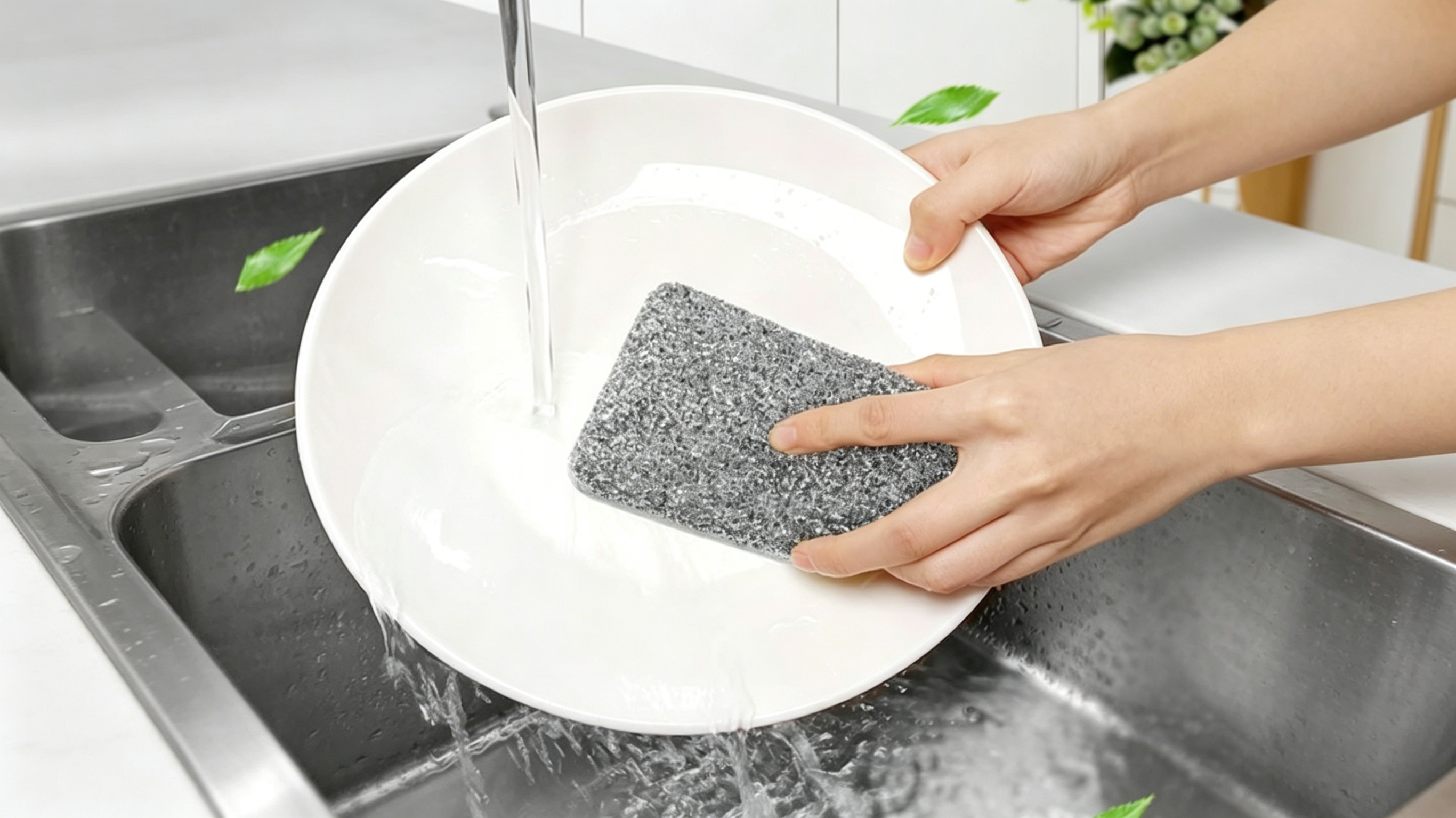
In 2026, the high-density composite dual-sided sponge brush is becoming one of the most practical growth products in the kitchen cleaning tools category. Based on our market observation, this product type has grown by 68% year over year. This figure is not an official statistic from a government agency or research institution; it is our commercial reading of customer inquiries, distributor orders, OEM/ODM projects, e-commerce feedback, retail kitchenware demand, restaurant supply requests and private label development.
The reason for this growth is easy to understand. Kitchens create different kinds of cleaning problems every day: burnt-on food on pots, grease around the stove, sauce residue on pans, oil marks on lids, cooked starch on utensils, water spots around the sink, and light stains on ceramic or glazed tableware. A single soft sponge may feel safe but often lacks cleaning power. A very aggressive scouring pad may remove soil quickly but can be too harsh for enamel, ceramic glaze, coated metal or non-stick surfaces. Consumers and professional buyers are looking for a balanced tool.
Our high-density composite dual-sided sponge brush is designed for that exact balance. The harder side helps tackle burnt-on grease, stuck food and stubborn kitchen soil. The softer side is intended for final wiping, foam removal and more careful cleaning on compatible delicate surfaces. We do not claim that any sponge can guarantee zero scratches on every cookware coating. Correct use matters: users should check the cookware manufacturer’s care instructions, avoid excessive pressure, test a small area first and use the appropriate side for the right surface. With that honest approach, the product becomes both strong and trustworthy.
1. Why dual-sided cleaning is becoming the preferred kitchen format
Modern kitchens are full of mixed materials. One meal may involve a stainless-steel pot, a non-stick frying pan, a ceramic bowl, a glass lid, a baking tray, a plastic storage box and a glazed plate. Each surface needs a different level of cleaning force. If the user has to switch tools constantly, the kitchen sink becomes cluttered. If the user uses only one aggressive tool, delicate surfaces may suffer.
A dual-sided sponge brush solves this problem by putting two working zones into one product. The hard side gives more mechanical cleaning action for grease, baked-on food and tougher residues. The soft side supports final wiping, gentle finishing and daily dishwashing. This makes the product easier to explain, easier to sell and easier to use.
That is why our market observation shows 68% growth in 2026. Buyers are not only asking for “a sponge.” They want a smarter cleaning tool with clear functional logic: one side for tougher soil, one side for more careful cleaning. This simple message works well for supermarkets, kitchenware chains, online marketplaces, restaurant supply channels and private label brands.
2. High-density composite structure improves the user experience
Density matters because a sponge that is too loose collapses quickly and feels weak in the hand. A sponge that is too rigid may feel uncomfortable and may not hold detergent well. A high-density composite structure gives a more stable grip, better shape retention and a more reliable cleaning feel during repeated use.
Our product can combine different layers: an active cleaning layer, a high-density sponge core and a softer wiping layer. The structure can be adjusted depending on the market. A household version may prioritize comfort and foam. A restaurant version may prioritize durability. A retail premium version may use thicker material and better visual finishing. An e-commerce version may focus on clear colors, strong packaging and easy product demonstration.
The composite structure also helps communicate value. Consumers can see and feel that the product is not a thin disposable sponge. It has body, texture and purpose. For distributors and brands, this makes the product more attractive than a generic low-density kitchen sponge.
3. The hard side: designed for burnt-on grease and stubborn soil
The hard side of the sponge brush is meant for kitchen situations where ordinary wiping is not enough. Burnt-on sauce, dried starch, cooked oil, pan residue, stove-area grease and food stains often need more than foam. They need physical cleaning action. The active surface helps loosen and remove these residues when used with water and a suitable dishwashing detergent or kitchen cleaner.
The American Cleaning Institute describes hand dishwashing as a process that includes preparing dishes, using clean hot soapy water, washing, rinsing and drying. It also explains that dish detergent can be diluted in water or applied directly to a sponge or dirty dish. This fits real kitchen use: detergent softens grease, water helps loosen soil, and the sponge provides mechanical action.
Our hard side is designed to support that process. It does not replace detergent, soaking or correct cleaning steps. Instead, it makes the scrubbing step more efficient. For pots, pans, baking trays, stove grates, outer cookware surfaces and sink areas, this side helps users reduce repeated rubbing and finish the task faster.
4. The soft side: final wiping and cookware-care awareness
The soft side is not just a decorative layer. It plays a practical role after the harder side has loosened soil. It helps spread foam, remove remaining detergent, wipe away fine residue and leave the surface looking cleaner. It is also better suited for surfaces that do not require strong abrasion.
For ceramic bowls, glazed plates, enamel cookware, glass lids and compatible coated cookware, the soft side can help reduce unnecessary surface stress when compared with aggressive scrubbing. However, it is important to say this correctly. “Soft side” does not mean safe for every coating under every condition. Non-stick cookware, enamel, painted surfaces, decorative glazes, polished metal and coated surfaces should be cleaned according to manufacturer instructions, and users should test gently before wider use.
Our packaging can communicate this responsibly: hard side for stubborn soil on suitable surfaces, soft side for final wiping and delicate cleaning, test first on sensitive surfaces, do not use excessive pressure, and avoid using the hard side on non-stick or easily scratched coatings unless the cookware manufacturer allows it. This honesty protects the brand and builds long-term trust.
5. Kitchen cleanliness depends on tools, water, detergent and routine
FoodSafety.gov and CDC emphasize the four food safety steps: Clean, Separate, Cook and Chill. The Clean step includes washing hands, utensils, cutting boards and countertops often. This broader context shows that kitchen cleaning is not only about making cookware look shiny. It is about removing visible soil, food residues and contamination points from surfaces and tools used every day.
A sponge brush is not a disinfectant and should not be marketed as killing germs by itself. Its role is physical cleaning. It helps remove grease, food residue and visible soil so that surfaces can be better maintained. If sanitizing or disinfecting is required, users should follow the instructions of the relevant cleaning product, the cookware manufacturer and local food safety guidance.
Our product fits into this practical routine. It supports daily dishwashing, stove-area wiping, sink cleaning and cookware care. It is especially useful where the user needs both cleaning strength and finishing control in one hand.
6. Sponge hygiene: the product must include care guidance
NSF notes that kitchen sponges and dishcloths can rank among the germiest household items when they are not cleaned, dried or replaced properly. This is an important point for any sponge product. A good sponge does not stay clean by magic. It needs to be rinsed, squeezed, dried and replaced regularly depending on use.
That is why our product strategy includes not only the sponge itself, but also the instruction system. Packaging can advise users to rinse thoroughly after use, remove food particles, squeeze out water, store in a ventilated area, avoid leaving the sponge soaking in the sink, separate sponge use by kitchen zone when needed and replace the sponge when it becomes worn, smelly or damaged.
This responsible guidance increases user satisfaction. Consumers understand how to make the product perform better, and brands avoid unrealistic claims. For restaurant and hotel kitchen buyers, proper cleaning and drying instructions are also important because tools are used more frequently than in a household.
7. Safe chemistry matters when cleaning grease
Kitchen cleaning often combines a tool with a chemical product, such as dishwashing liquid, degreaser or multipurpose cleaner. EPA Safer Choice helps consumers and commercial purchasers identify cleaning products made with safer chemical ingredients. This does not mean every cleaner is suitable for every surface, but it reinforces the importance of choosing cleaning products carefully and using them according to directions.
Our dual-sided sponge brush is designed to work with common dishwashing detergents and suitable kitchen cleaners, but users should always read the cleaner label. Strong chemicals, abrasive powders or incompatible degreasers can damage cookware or surfaces regardless of the sponge. The correct cleaning system combines the right liquid, the right sponge side, the right soaking time and the right pressure.
For OEM/ODM customers, we can prepare instruction cards that explain this clearly: do not mix cleaning chemicals, avoid using strong cleaners on delicate coatings without testing, rinse thoroughly after cleaning, and use the soft side for surfaces that require gentler treatment.
8. Cookware coating protection requires realistic communication
The user’s concern is real: nobody wants to damage a pot, pan or glazed plate while cleaning. But product claims must be realistic. A sponge can help reduce the risk of scratching when designed and used properly, but no sponge can guarantee that all coatings remain undamaged under all pressure, all cleaners and all surface conditions.
Our messaging is therefore precise: the hard side is for burnt-on soil on suitable surfaces; the soft side is for more careful wiping and finishing; delicate cookware coatings should be tested first; avoid using the abrasive side on non-stick, soft coatings, painted surfaces or decorative glaze unless the cookware manufacturer permits it.
This approach does not weaken the product. It makes the product credible. Consumers appreciate a brand that tells them how to use a tool correctly. Retailers and distributors also prefer products with clear warnings because they reduce complaints and returns.
9. Shape and grip influence cleaning efficiency
The sponge’s shape affects how it works. A thick rectangular shape is easy to hold and package. A curved shape can sit better in the hand. A pointed corner can reach around pan handles, sink edges and stove corners. A longer form can cover larger cookware faster. A compact form can be easier for smaller hands or travel kitchens.
Our product can be customized in multiple shapes: standard sponge pad, sponge brush with grip, ergonomic waist shape, thick composite pad, slim dish sponge, pot-and-pan sponge, stove cleaning sponge, sink sponge or restaurant bulk sponge. The shape is not only visual; it changes how pressure is applied.
For long cleaning sessions, grip comfort matters. A sponge that is easy to hold reduces slipping and helps the user control pressure. This is especially important when switching between hard-side scrubbing and soft-side finishing.
10. Color coding helps organize kitchen tasks
Color can be more than decoration. In households, restaurants and hotel kitchens, different colors can help separate use areas: one color for dishes, one for sink cleaning, one for stove cleaning and one for general surfaces. This helps users avoid using the same sponge everywhere without proper cleaning.
We can customize color systems according to the client’s brand or usage logic. For example, blue for dishwashing, green for vegetables and general surfaces, gray for stove area, yellow for light cleaning or red for heavy grease. Colors can be matched with packaging icons so users understand the intended purpose immediately.
For private label brands, color-coded sets increase shelf appeal and encourage multi-pack sales. A set of three or four sponges can be positioned as a more complete kitchen cleaning solution than a single sponge.
11. Home, restaurant and hotel versions need different specifications
A home kitchen user wants convenience, attractive colors and a sponge that feels comfortable. A restaurant kitchen needs stronger durability and bulk packaging. A hotel kitchen or serviced apartment supplier may need standardized packs with clear usage categories. Retailers need packaging that explains the dual-sided value at a glance. E-commerce sellers need strong visuals and keyword-rich product positioning.
Our company can produce different versions for each channel. The home version may focus on comfort and design. The restaurant version may increase density and durability. The hotel version may come in bulk packs. The retail version may use hanging packaging or paper sleeves. The e-commerce version may use a boxed set with lifestyle photos and multilingual instructions.
This channel-based product planning helps brands avoid generic competition. Instead of selling one ordinary sponge, they can sell a product line for specific cleaning needs: heavy grease, cookware care, stove cleaning, sink cleaning, restaurant cleaning or family kitchen organization.
12. OEM customization: fast launch under your brand
Our OEM service helps importers, wholesalers, kitchenware brands, supermarket chains, restaurant suppliers, hotel suppliers, e-commerce sellers and private label companies launch high-density composite dual-sided sponge brushes under their own brand quickly. Customers can customize material, density, size, shape, abrasiveness, soft layer, color, logo, packaging, barcode, instruction card, outer carton and set structure.
OEM is valuable because it shortens development time. The customer can choose an existing proven structure and adapt it to market positioning. A retail brand may want a two-pack with colorful packaging. A restaurant supplier may want a 50-piece bulk pack. A premium kitchenware brand may want neutral colors, stronger density and a clean minimalist box. An online seller may want a mixed-color set and clear “hard side / soft side” photos.
Our OEM process supports quick sampling, material confirmation, packaging layout, logo printing, production planning and shipment preparation. This helps customers bring products to market faster while maintaining brand identity.
13. ODM customization: build a differentiated cleaning tool
ODM is ideal for customers who want a product that looks and feels different from ordinary kitchen sponges. We can develop a unique sponge shape, exclusive composite layer combination, improved bonding structure, ergonomic grip, special hard-side texture, softer finishing layer, hanging hole, packaging window, color-coded family set or professional HoReCa version.
This matters because the sponge market is competitive. If every product looks the same, the buyer compares only price. A differentiated ODM design allows the brand to sell function: high-density body, dual cleaning zones, cookware-care guidance, stronger packaging, better drying instructions and clearer use scenarios.
We support the ODM process from concept to mass production: idea development, material selection, sample testing, density adjustment, abrasiveness testing, bonding review, packaging design, multilingual instructions and quality control. The goal is not only to make a sponge, but to create a sellable kitchen cleaning solution.
14. Packaging should explain the two-side logic immediately
A dual-sided sponge sells best when the packaging instantly explains what each side does. If customers see only a sponge, they compare it with the cheapest option. If they see “hard side for burnt-on grease” and “soft side for final wiping and cookware care,” they understand why the product is different.
We can develop packaging with icons, surface guidance, usage steps, cleaning reminders and warnings for delicate cookware. A simple diagram can show: soak stubborn soil, apply detergent, use the hard side on suitable surfaces, rinse, then use the soft side for finishing. This makes the product more user-friendly.
Packaging options include paper sleeve, polybag, retail hanging card, blister pack, printed box, bulk carton, e-commerce box and private label packaging. We can provide English, Spanish, French, German, Italian, Russian, Arabic, Japanese, Korean and other language instructions depending on the market.
15. Why choose our company
Our company understands that a sponge brush is a small product with a big performance expectation. Users want it to remove grease, protect cookware as much as possible, feel comfortable in the hand, hold detergent, rinse easily, dry properly and last long enough to justify purchase. Brands want stable quality, clear packaging, strong product photos, repeatable supply and customization flexibility.
We can serve household kitchen brands, supermarket chains, home goods stores, restaurant suppliers, hotel suppliers, cleaning companies, e-commerce sellers, distributors and private label projects. For each channel, we adjust product design and packaging. Home users need comfort and attractive design. Restaurants need durability and bulk supply. Retailers need shelf communication. Online sellers need strong visual differentiation and clear keywords.
We can also develop related product lines: sponge brushes, scouring pads, microfiber cloths, bottle brushes, dish brushes, plastic scrapers, sink cleaning tools, kitchen cleaning sets and other cleaning tools. This helps customers build a complete kitchen cleaning category rather than relying on one SKU.
Conclusion: two sides match two real kitchen cleaning needs
The high-density composite dual-sided sponge brush is growing by 68% in 2026 based on our market observation because it answers a real kitchen problem. Users need cleaning strength for burnt-on grease and stubborn soil, but they also need a softer side for final wiping and more careful cookware care. A well-designed dual-sided sponge puts both needs into one practical tool.
International sources support the wider cleaning context. The American Cleaning Institute explains hand dishwashing steps and the use of detergent in water or directly on a sponge or dish. FoodSafety.gov and CDC emphasize the Clean step for hands, utensils, cutting boards and countertops. NSF notes that kitchen sponges and dishcloths can rank among the germiest household items if not properly cleaned and dried. EPA Safer Choice helps consumers and commercial buyers identify cleaning products made with safer chemical ingredients.
Our company helps turn this demand into market-ready products. We offer high-density composite dual-sided sponge brushes with OEM/ODM customization: material, density, hard-side texture, soft-side layer, shape, grip, size, color, logo, set structure, packaging, multilingual instructions, home version, restaurant version, hotel kitchen version, retail version, e-commerce version and private label. For consumers, it is a practical kitchen cleaning tool. For brands and distributors, it is a customizable, easy-to-explain and high-potential cleaning tools product for 2026.
high-density composite sponge brush, dual-sided sponge brush, double-sided kitchen sponge, sponge brush for burnt-on grease, hard side cleaning sponge, soft side cleaning sponge, cookware cleaning sponge, sponge for coated cookware, non-stick cookware sponge, enamel cookware sponge, ceramic cookware sponge, kitchen grease cleaning sponge, burnt-on residue sponge, dishwashing sponge brush, kitchen cleaning sponge, heavy-duty kitchen sponge, non-scratch sponge brush, sponge for pots and pans, sponge for stove grease, sponge for kitchen sink, composite cleaning sponge, high-density sponge pad, cookware care sponge, glaze-friendly sponge, cleaning tools OEM, cleaning tools ODM, sponge brush OEM, sponge brush ODM, kitchen sponge OEM, kitchen sponge ODM, custom sponge brush, private label sponge, sponge brush manufacturer, kitchen sponge supplier, branded cleaning sponge, sponge with logo, sponge brush packaging, multilingual cleaning instructions, restaurant kitchen sponge, hotel kitchen cleaning sponge, e-commerce cleaning tools, retail kitchen sponge set



